Name: Drashti Joshi
Batch: M.A. Sem.1 (2022-2024)
Enrollment N/o.: 4069206420220016
Roll N/o.: 06
Subject code & Paper N/o.: 22395-
Paper 104: Literature of the Victorian era.
E-mail Address: drashtijoshi582@gmail.com
Submitted to: Smt. S.B. Gardi Department of English- M.K.B.U.
Date of submission: 7th November, 2022
Symbols in ' Hard Times'
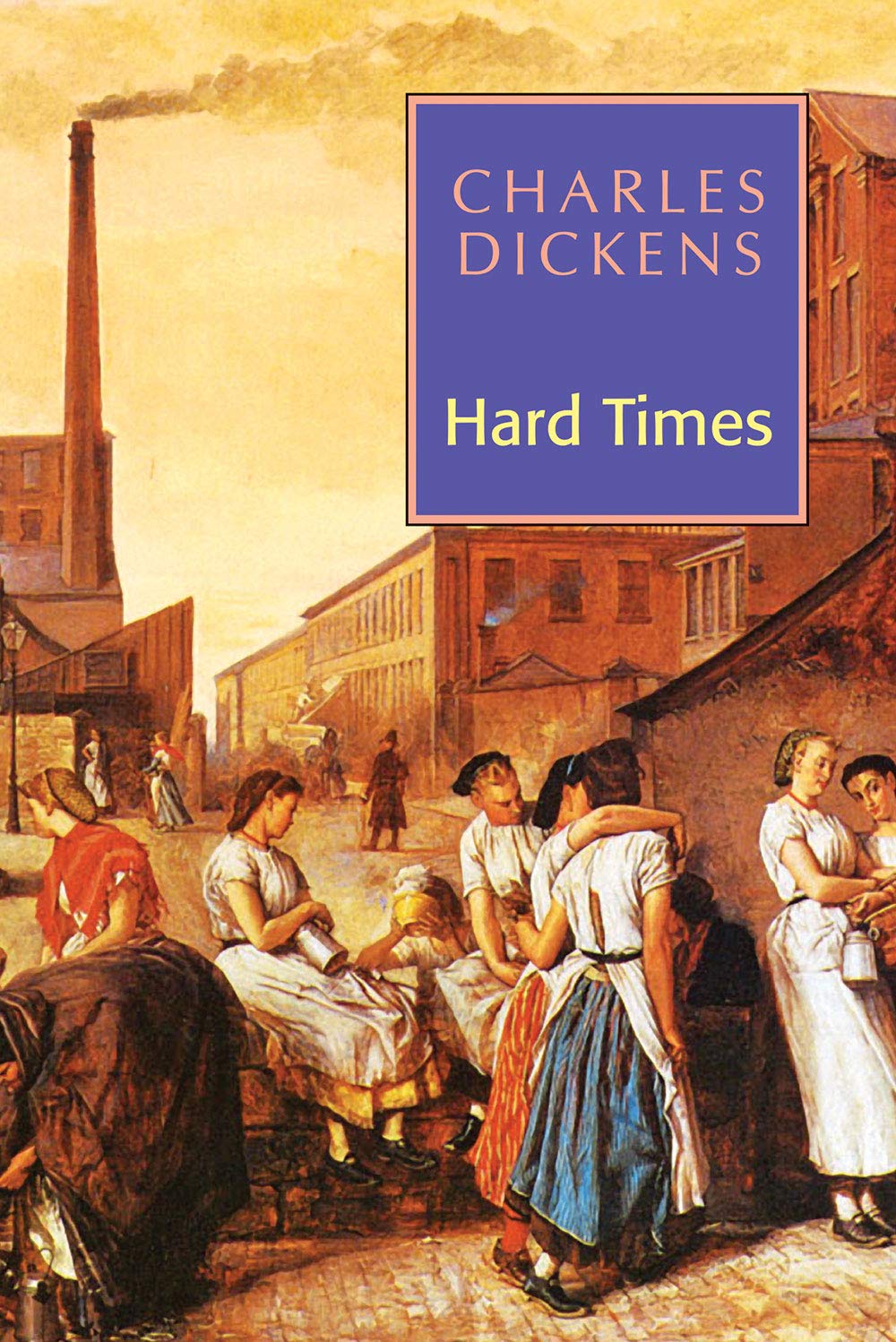
Dickens uses symbols in his novel in order to give an exact shape to his moral purpose. Most of the characters in the novel are an embodiment of a certain idea or principle. There are two groups of symbolic characters: one symbolizing the objectionable qualities of Victorian life, and other symbolizing certain positive qualities and these two opposite poles are confronted with the novel.

Dickens not only uses characters as symbols, but the setting of Coke town as a brick jungle as it is the symbol of ugly industrialization. The industries and factories scattering in the towns make the city dirty with black smoke symbolise unnatural death of the workers by the modern monster like machines.
Among the characters who symbolise vice, evils, abuses and pitfalls of the ugly society is Mr. Gradgrind who holds the first and foremost position in his society. He successfully symbolises the negative qualities of the utilitarian education system. He entirely focuses on the facts, calculation and numbers and denies the attachments with fancy, love, emotions and imaginations. He is the rigid and blind follower of the absurd utilitarian educational theory. What he gives importance to is just the factual knowledge not the practical learning because of which he has to lose the charm and beauty of his children’s lives.
Another major character Bounderby, the banker and manufacturer, is the symbol of utilitarian economic theory and the theory of Laissez Faire (the theory which believes that economy works best if private industry is not regulated and markets are free). This ugly man represents the greed for money and inhumanity in his practical life. When it comes to the fulfilment of the basic requirements of his workers, he turns his deaf ear and moreover he dismisses Stephen Blackpool.
The daughter of Gradgrind, Louisa becomes the symbol of the suffering and victim of wrong education, upbringing, imposition of fact, avoidance of imagination from one’s life. She receives our sympathy when she can’t identify her feeling of love and pain. Tom, brother of Louisa, too symbolises the same dangerous product of his father’s absurd theory of education and upbringing. Bitzer symbolised another evil of the then existing society and culture. He is the best product of Gradgrind’s principle of education for whom everything if the matter of bargain and is controlled by self-interest. Mrs. Sparsit becomes the symbol of snobbery and hypocrisy of the upper class of the Victorian era.
The other group of people who represent positive features of that society are Stephen Blackpool, Rachel, Sissy Jupe and the Circus. Stephen and Rachel are the symbol for noble minded and generous persons. Sissy Symbolises vitality as well as goodness: she has a golden heart and is full of spirit of service. She represents the opinion of the antithesis of calculating self-interest. The circus and its people are the symbol of humanity and art where different colours of life are counted and emotion, sentiments have right place and value
Mrs. Sparsit, who has not quite gotten over having to leave Mr. Bounderby's house to make way for Louisa, maliciously watches the affair between Louisa and Mr. Harthouse progress with glee. As the two slowly draw closer together, she imagines that Louisa is slowly descending a great winding staircase. Down, down, down she goes…and when Louisa finally elopes or disgraces herself publicly in some other way with Mr. Harthouse, Mrs. Sparsit imagines her stepping off the bottom of the staircase and falling into a dark abyss. Louisa, of course, never quite falls off this staircase as she refuses to elope with Mr. Harthouse.
Pegasus:

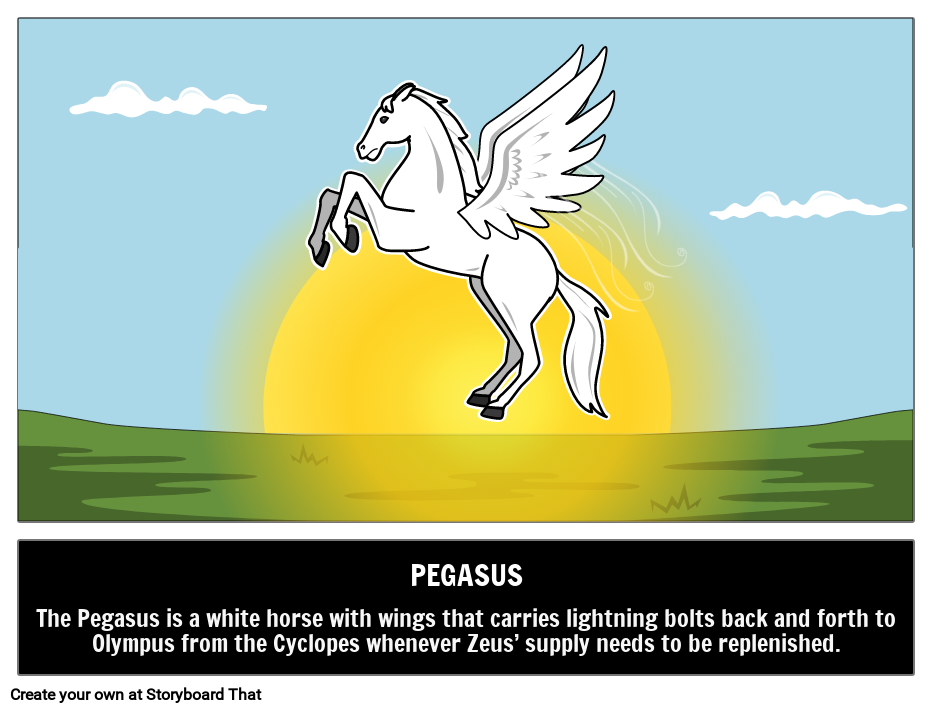
The Pegasus's Arms is the name of the tavern at which the circus company is staying when Sissy returns with Mr. Gradgrind and Mr. Bounderby to find her father gone at the very beginning of the novel. Pegasus, a mythical winged horse, represents the imaginary and fantastical world in which imagination is allowed to soar: a world the Gradgrinds are forbidden to experience. It is the perfect residence, on the other hand, for Sissy's father's circus company, who make the world of magic and fairy stories come to life. This is what gives Sissy such a good heart: free exercise of her imagination and her heart.
Smoke Serpents:


At a literal level, the streams of smoke that fill the skies above Coke town are the effects of industrialization. However, these smoke serpents also represent the moral blindness of factory owners like Bounderby. Because he is so concerned with making as much profit as he possibly can, Bounderby interprets the serpents of smoke as a positive sign that the factories are producing goods and profit. Thus, he not only fails to see the smoke as a form of unhealthy pollution, but he also fails to recognize his own abuse of the Hands in his factories. The smoke becomes a moral smoke screen that prevents him from noticing his workers’ miserable poverty. Through its associations with evil, the word “serpents” evokes the moral obscurity that the smoke creates.
Fire:

When Louisa is first introduced, in Chapter 3 of Book the First, the narrator explains that inside her is a “fire with nothing to burn, a starved imagination keeping life in itself somehow.” This description suggests that although Louisa seems coldly rational, she has not succumbed entirely to her father’s prohibition against wondering and imagining. Her inner fire symbolises the warmth created by her secret fancies in her otherwise lonely, mechanised existence. Consequently, it is significant that Louisa often gazes into the fireplace when she is alone, as if she sees things in the flames that others—like her rigid father and brother—cannot see. However, there is another kind of inner fire in Hard Times—the fires that keep the factories running, providing heat and power for the machines. Fire is thus both a destructive and a life-giving force. Even Louisa’s inner fire, her imaginative tendencies, eventually becomes destructive: her repressed emotions eventually begin to burn “within her like an unwholesome fire.” Through this symbol, Dickens evokes the importance of imagination as a force that can counteract the mechanization of human nature.
Circus:

With clowns, acrobats, and elaborate horse-riding shows based on legendary themes, the circus symbolizes the triumph of imagination and whimsy, or what Mr. Gradgrind would call "fancy." The circus features such performance pieces as the enticingly named "equestrian Tyrolean flower-act," which presumably combines flowers and horses in a creative way. Another performance features Master Kidderminster as Cupid, complete with "curls, wreaths, and wings." These performances provide factory workers an escape from the monotony and squalor of everyday life.
Even though wealthy men such as Mr. Gradgrind and Mr. Bounderby dismiss circus performers as disreputable slackers, circus performances require great skill and extensive training, showing the variety of expertise and ability that can lead to a productive and satisfying life, one most definitely not based on fact. The circus represents not merely the escape entertainment provides but also a broader understanding of what success and prosperity can mean. The dismissal of the circus, in turn, represents a restrictive worldview that neglects the validity of fanciful human joy.
Bank:

In complete contrast to the haphazard whimsy of the circus, the bank is a regimented and organized space, cleaner than the factories but dismal and restrictive in its own way. It is part of "the wholesome monotony of the town," a red brick building nearly indistinguishable from the other red brick buildings that surround it. The desks in the office space are set up in rows that echo the rows of machines in a factory, and Tom Gradgrind finds his place in the bank as oppressive as Stephen Blackpool finds the factory—perhaps more so. It is a privileged but dull existence. As a symbol of wealth, the bank shows how wealth oppresses those who don't have it. The images of heavy doors and locks emphasize how the money is kept separate from all human eyes and hands.
The building itself, as well as the institution, is a symbol. A nondescript but imposing brick structure, the bank is inaccessible to those who do not have money, and thus serves as a physical reminder of what people living in poverty can never obtain.
Animal:

It is a striking feature of Hard Times that the novel begins with the question of how to define a horse, just as E. M. Forster's novel The Longest Journey begins with the philosophical words : "The cow is there." Indeed, the symbols of animals, as well as those of flowers, frequently appear, and are sustained throughout the novel. I think that Dickens's sustenance of these symbols in the novel is far more significant than is generally supposed because he offers us two incompatible types of characters by presenting the fundamentally different interpretations of these symbols. Dickens's way of introducing animal and flower symbols is skillful. The reader first encounters these symbols in the scene of the Gradgrind school, where Mr. Thomas Gradgrind, an "eminently practical" gentleman, makes "Girl number twenty" (Sissy Jupe) define a horse. Though she and her father belong to Mr. Sleary's travelling (horse-riding) circus and though she has been brought up among a lot of horses, she cannot answer him at all. Bitzcr defines a horse very well, using the dictionary's definition. Mr. Gradgrind seems content with this model pupil's definition. Then, a government officer steps forth and asks the pupils whether they would "paper a room with representations of horses" To this question one half of the children answer in the affirmative but he forces them to answer in the negative. Mr. Gradgrind is also in the same opinion as his companion. It seems unreasonable to have the representation of horses on the wall. Now, this government gentleman asks the children whether they would use "a carpet having a representation of flowers upon it ." Sissy is one of "a few feeble stragglers (who) said Yes," because she is "very fond of flowers." Then, she is asked why she would "put tables and chairs upon them, and have people walking over them with heavy boots." Sissy's answer is : "It wouldn't hurt them, sir. They wouldn't crush and wither if you please, sir. They would be the pictures of what was very pretty and pleasant, and I would fancy—" She is interrupted by the gentleman's cry : "Ay, ay, ay! But you mustn't fancy"
Thank you so much for reading this Assignment.
{Words-1787}
{Images-11}
{Videos-01}
{Pages-08}


