In this blog, I reflect on what I learned from the insightful video by Dr. Kalyani Vallath. The video discusses practical ways to organize reading and writing during academic research. It helped me understand how proper planning and organization can make the research process more effective and manageable.
Here is the video recording:
What is Research?
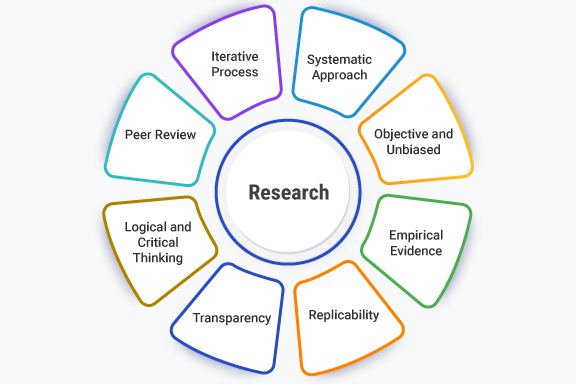
Research is a systematic investigation, which often follows a methodical process, of a specific topic, issue, or area of study in order to discover new information, achieve greater understanding of concepts, confirm information, or arrive at a possible solution to a problem. In other words, research encompasses asking of pertinent questions, acquiring data, analyzing them critically, and coming to logical conclusions.
Research is not just about gathering data. It entails immersing oneself into the body of literature surrounding the issue at hand. To a certain extent, it could even be argued that it is close to assembling a jigsaw puzzle. There is the existing puzzle (the literature), and the researcher puts it together to see what picture it makes. To this end, one may say that research involves reading, analyzing, critiquing, comparing, contrasting, synthesizing, and organizing the information found in the course of research.
It goes without saying that when a literary researcher begins working on a project, there is already a body of literature, scholarly work, or research on it. After all, T. S. Eliot argued that “literature is a conscious art,” and that “the historical sense involves a perception, not only of the pastness of the past, but of its presence.” In fact, in research, and specifically literary research, one’s predecessors are extremely important. They are the ones who paved the way for the current research, and their works should be regarded as one’s foundation. Therefore, it is of paramount importance to research what has already been written about the issue and incorporate it into one’s own work. Moreover, just as in the case with assembling a jigsaw puzzle, one needs to see how different pieces fit together in order to see the whole picture. Thus, a researcher must be able to analyze previous works in order to synthesize them with the issues one is investigating.
In this regard, research is not individual, as it builds upon the works of predecessors. In addition, it cannot be just regurgitating information already provided, as a researcher will fail to do so without properly citing one’s predecessors. On the other hand, presenting information logically and systematically is essential in order to both organize the information one has amassed, as well as to properly cite others. In fact, research is, in essence, both about finding a way to present one’s findings in an organized manner, as well as about adding one’s voice to the discussion in order for future generations of researchers to be able to carry on the scholarly conversation.
Organizing the Research Process:
One of the important things I learned from Dr. Kalyani Vallath’s video is that research becomes easier when it is properly organized. Research is a long process that involves reading, collecting information, taking notes, developing arguments, writing, revising, and managing references. If these activities are not organized, a researcher may feel confused and may find it difficult to understand how different ideas are connected.
The first step in organizing research is to have a clear understanding of the research topic and research questions. Once the researcher knows what they want to study, it becomes easier to decide what kind of information is relevant. Instead of reading everything available on a subject, the researcher can read with a specific purpose. This makes the research process more focused and saves time.
Importance of Planning and Time Management:
Research is a long-term process, especially at the Ph.D. level. It involves reading primary and secondary texts, attending academic activities, writing chapters, preparing presentations, reviewing literature, and completing other academic requirements. Therefore, planning and time management are essential for a researcher.
Research work can be divided into smaller and manageable tasks. For example, instead of setting a general goal such as “work on the thesis,” I can set specific goals such as “read one theoretical chapter,” “prepare notes on identity". Small goals make the larger research project easier to manage.
Time management also requires balancing reading and writing. Researchers sometimes feel that they must finish all their reading before they begin writing. However, writing can also help develop ideas and reveal gaps in understanding. Therefore, reading and writing should continue alongside each other.
For my research, I can prepare a schedule that divides my work into primary-text reading, theoretical reading, note-making, textual analysis, literature review, and writing. I can also maintain a record of completed work and identify what needs to be done next.
Planning does not mean that every stage of research will always happen according to a fixed timetable. Research is flexible, and new ideas may change the direction of the work. However, having a plan provides a framework and helps the researcher remain focused.
Several digital tools and techniques can aid the research process:
- Use table of contents or indexes to locate relevant sections in texts.
- Utilize "Find in Page" functions for keyword-based searching.
- Apply bookmarks to highlight important sections for later reference.
- Add comments or annotations for personal observations or cross-references.
- Hyperlink online resources for quick access to primary or related materials.
Applications like Google Docs and MS Word are effective for organizing notes, structuring arguments, and maintaining a clean record of the research process.
Structuring the Research:
A clear methodological and structural approach strengthens the research. This includes:
- Maintaining separate files for different subsections.
- Using numbered outlines or codes for easy reference.
- Organizing the literature review thematically or chronologically.
Planning chapters around key arguments: typically including an Introduction, Literature Review, Analysis/Key Arguments, and Conclusion.
Best Practices in Research Management:
- Maintain separate and well-labeled files for each subsection.
- Assign codes or numbers for efficient cross-referencing.
- Frame analytical questions as potential chapter arguments.
- Note both supportive and opposing views during reading.
- Document the historical development of the research area.
- Keep track of all bibliographic details for accurate citation.
Writing should be a continuous process alongside reading. Consistent engagement with primary and secondary texts, coupled with organized note-taking and critical thinking, builds a strong foundation for original academic research.
How I Can Apply These Ideas to My Own Ph.D. Research:
The ideas discussed by Dr. Kalyani Vallath are particularly useful for my own Ph.D. research, titled “Journey, Identity, and the Fragmented Self: A Postmodern Literary Reading of Selected Film Scripts of Imtiaz Ali.” My research involves the close reading of five selected scripts Jab We Met, Rockstar, Highway, and Tamasha. Since my research is based on scripts rather than the completed films, systematic textual reading and note-making will be especially important.
First, I can organize my primary texts separately. I can maintain individual notes for each script and record important dialogues, scenes, characters, narrative developments, and recurring themes. I can then identify how concepts such as journey, identity, selfhood, fragmentation, freedom, authenticity, and transformation appear in each script.
Second, I can create a literature-review table. The table can include the scholar's name, title of the work, year of publication, major argument, theoretical approach, and relevance to my research. This will help me understand the existing scholarship and identify areas where my research can make a contribution.
I can also organize my work according to my chapters. For example, I can keep separate folders for the introduction, theoretical framework, script-based analysis, and conclusion. Within each folder, I can arrange relevant articles, notes, quotations, and arguments.
Finally, I can prepare a regular research schedule. I can divide my time between reading, note-making, script analysis, writing, and revision. Instead of waiting until I have completed all my reading, I can begin writing short sections and gradually develop them into larger arguments.
Applying these methods will help me make my research process more systematic and manageable. Most importantly, it will help me move from simply collecting information to organizing, interpreting, and developing my own scholarly argument. The video has therefore encouraged me to become more conscious of how I read, record, organize, and use research material.
References:
DoE-MKBU. Practical Ways to Organise Research Reading and Writing: Kalyani Vallath. YouTube, https://youtu.be/QVRLr_8uH0E?si=8O-_UTr0a3tC6ALC.

No comments:
Post a Comment